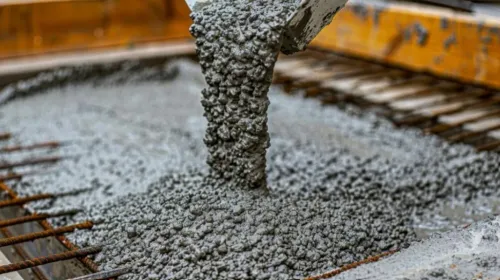

A low map distance does not prove that an RMC dealer can supply the right concrete to your site at the right time. Before placing an order, you need a complete specification, a measured quantity, a workable delivery plan and a documented method for accepting or rejecting each load.
Key takeaways
- Confirm grade, exposure class, slump and maximum aggregate size before requesting quotes.
- Calculate quantity with waste allowance and verify truck access, turning space and unloading time.
- Agree dispatch windows, route constraints and delay charges in writing.
- Request mix design, batch tickets, test reports and plant quality records before ordering.
Confirm the Concrete Specification Before You Ask for a Quote
Ask for a quotation only after you define the concrete by performance and compliance, not just “M25 with 100 mm slump.” Searching for an RMC dealer near me is useful only after you know what the structural drawings and the IS 456 concrete specification require.
1. Confirm the concrete grade and characteristic strength with the structural engineer. For structural work, request a design mix supported by trial data under IS 10262, not an unexplained nominal mix.
2. State the exposure class, maximum water-cement ratio, minimum cementitious content, chloride limit, cement or supplementary-material restrictions, nominal maximum aggregate size, target slump at placement, admixture requirements and any required early-age strength.
3. Tell the producer whether the concrete will be pumped. Confirm the pump type, line diameter and approximate pipeline length; a mix suited to a short discharge can cause blockage, pressure spikes, segregation or severe slump loss in a long line.
4. Ask whether production follows IS 4926 requirements for ready-mixed concrete. Obtain the producing plant, mix-design identification, revision number and validity period.
5. Require each truck’s batch ticket to show plant and truck identification, batching or water-addition time, mix designation, quantities of cementitious materials, aggregates, water and admixtures, and delivered volume. Reconcile it with the approved mix before placement.
Also give the quotation request the pour date and time, discharge rate, delivery address, access contact and required volume. Check every figure against the drawings and engineer’s instructions before accepting the price.
Calculate the Quantity and Test Whether the Site Is Reachable
Measure the placing geometry, not the supplier’s truck size. Calculate ready-mix concrete volume for each slab, beam, column, footing, wall or pour strip using length × width × thickness, or cross-sectional area × length. Add measured overbreak, formwork leakage and unavoidable spillage to get the RMC quantity calculation in cubic metres.
1. Add pump-line priming material separately. Ask the producer how much mortar or concrete is needed to prime the specified pump and whether it enters the structure or requires disposal.
2. Compare the calculated quantity with the supplier’s minimum dispatch quantity and truck capacity. Round the order only after agreeing how surplus, rejected loads and truck waiting time will be charged; otherwise a short pour or unused concrete can become a dispute.
3. Walk the delivery route with the dealer. Check the gate width, turning radius, road gradient, bridge or axle limits, overhead cables, reversing space and the distance from the truck’s discharge point to the pump. Poor truck access can stop a pour even when the concrete is ready.
4. Confirm the pump type, maximum reach, line diameter and approximate concrete pump pipeline length. A long or vertical line can cause blockage, pressure spikes, segregation and slump loss if the mix is unsuitable.
For a large pour, agree truck intervals, standby vehicles, an escalation contact and a rain contingency. Keep reinforcement and formwork ready before dispatch; a trial pour is sensible when pumping height, congested steel or surface finish is demanding.
Lock Down Route, Dispatch Timing and Delay Costs
Agree the delivery plan before the pour date: plant-to-site route, loading time, arrival window, discharge rate, maximum elapsed time from water addition to discharge, and the person who can change the schedule. Bengaluru traffic and road restrictions can make a nearby plant less reliable than a farther plant with alternate routes and spare trucks.
| Delivery arrangement | What to agree | Failure if omitted |
|---|---|---|
| Routine pour | RMC delivery schedule, truck spacing, site contact and unloading sequence | Trucks bunch together, then the pump runs dry |
| Large or critical pour | Standby vehicles, escalation contacts, weather contingency and pump-break procedure | A single delay interrupts a continuous pour |
| Delayed or rejected load | Maximum waiting time, cancellation point and site waiting charges | You dispute costs while concrete is already setting |
Put these points in the quotation or order confirmation:
- Confirm the route has been checked for turning space, height restrictions, axle limits, road closures and the truck’s approach to the pump.
- State whether the quoted quantity includes pump-line priming material, measured spillage and the supplier’s minimum dispatch quantity. Agree who pays for unused concrete, rejected loads and truck waiting time.
- Require each truck to arrive with a batch ticket showing plant and truck identification, batching or water-addition time, mix designation, ingredient quantities and delivered volume. Reconcile it before discharge.
- Prohibit site staff from adding water to recover slump. If the approved admixture is used, record it on the ticket and state the revised discharge time.
Ask SCP INFRA to name the escalation contact and confirm these terms in writing rather than relying on a driver’s phone call.
Request Mix, Plant and Quality Documents Before Ordering
Do not approve the quote until the producer can identify the plant, approved mix and records that will follow each load. Ask whether production follows IS 4926 requirements for ready-mixed concrete, then obtain the IS 10262 mix design identification, revision number and validity period.
1. Request the approved design mix and trial data for structural concrete, not an unexplained nominal mix. It should state the grade, adopted water-cement ratio, cementitious content, aggregate grading, admixture dosage and expected strength. Check it against the structural drawings and IS 456 requirements.
2. Obtain the durability limits from the project specification: exposure classification, maximum water-cement ratio, minimum cementitious content, chloride limit and restrictions on cement or supplementary materials. Passing cube strength alone does not prove durability compliance.
3. Require a batch ticket for every truck. It must show the plant and truck identification, batching or water-addition time, mix designation, quantities of cementitious materials, aggregates, water and admixtures, and delivered volume. Reconcile the ticket with the approved mix before discharge.
4. Confirm how slump adjustments are controlled. Site staff must not add unrecorded water; it raises the water-cement ratio. Any approved admixture addition must appear on the ticket with the revised discharge time.
5. For pumped concrete, record the pump type, line diameter and approximate pipeline length in the order file. Ask for evidence that the mix suits that route, because unsuitable grading can cause blockage, pressure spikes, segregation and rapid slump loss.
Inspect Every Load and Record Acceptance or Rejection
Do not let a truck discharge until site staff reconcile its concrete delivery challan with the approved mix and inspect the load. The ticket must show plant and truck identification, batching and any water-addition time, mix designation, quantities of cementitious materials, aggregates, water and admixtures, and delivered volume.
Compare the ticket with the order before placement begins.
- Record arrival time, discharge start and finish times, truck number, ticket number and delivered volume.
- Check the concrete’s appearance for segregation, bleeding, contamination or a stiffened load; run the agreed IS 1199 slump test at the discharge point and record the result.
- Confirm that no unauthorised water addition occurred. Permit an adjustment only with the approved admixture, written on the ticket with the revised discharge time and load traceability.
- Take and identify strength samples at discharge under the agreed procedure. Cast, cure and test cubes through the IS 516 cube test process; do not use leftover concrete or uncontrolled site curing as equivalent evidence.
A failed slump, missing ticket, excessive delay or visible segregation triggers the purchase-order rejection protocol: the named site authority records the reason, photographs the load, informs the supplier and isolates it from placement. Do not retemper or dispose of it without the agreed approval and cost rule.
Investigate cube results under IS 456, not as a single pass/fail number; also verify maximum water-cement ratio, cementitious content, exposure class and chloride limits, because strength alone does not prove durability.
Frequently asked questions
What concrete details should you confirm before requesting an RMC quote?
Confirm the strength grade, exposure class, slump at delivery, maximum aggregate size, cement type, admixtures and compliance requirements in the structural drawings and IS 456 specification.
How do you calculate the required ready-mix concrete quantity?
Calculate the measured volume from the structural dimensions, then add a controlled allowance for spillage, uneven excavation and site losses. Confirm the supplier’s truck capacity and minimum order.
What should you check about delivery access and timing?
Check the route, road width, height restrictions, turning space, pump position, unloading distance, site entry rules and the time available before concrete placement begins.
Which documents should you request before ordering RMC?
Request the mix design, plant and material quality records, relevant test reports, delivery documentation and the process for handling rejected loads or failed results.
What should you record when each concrete load arrives?
Record the truck number, batch time, arrival time, quantity, concrete temperature, slump result, water or admixture additions, placement location and whether the load was accepted or rejected.